


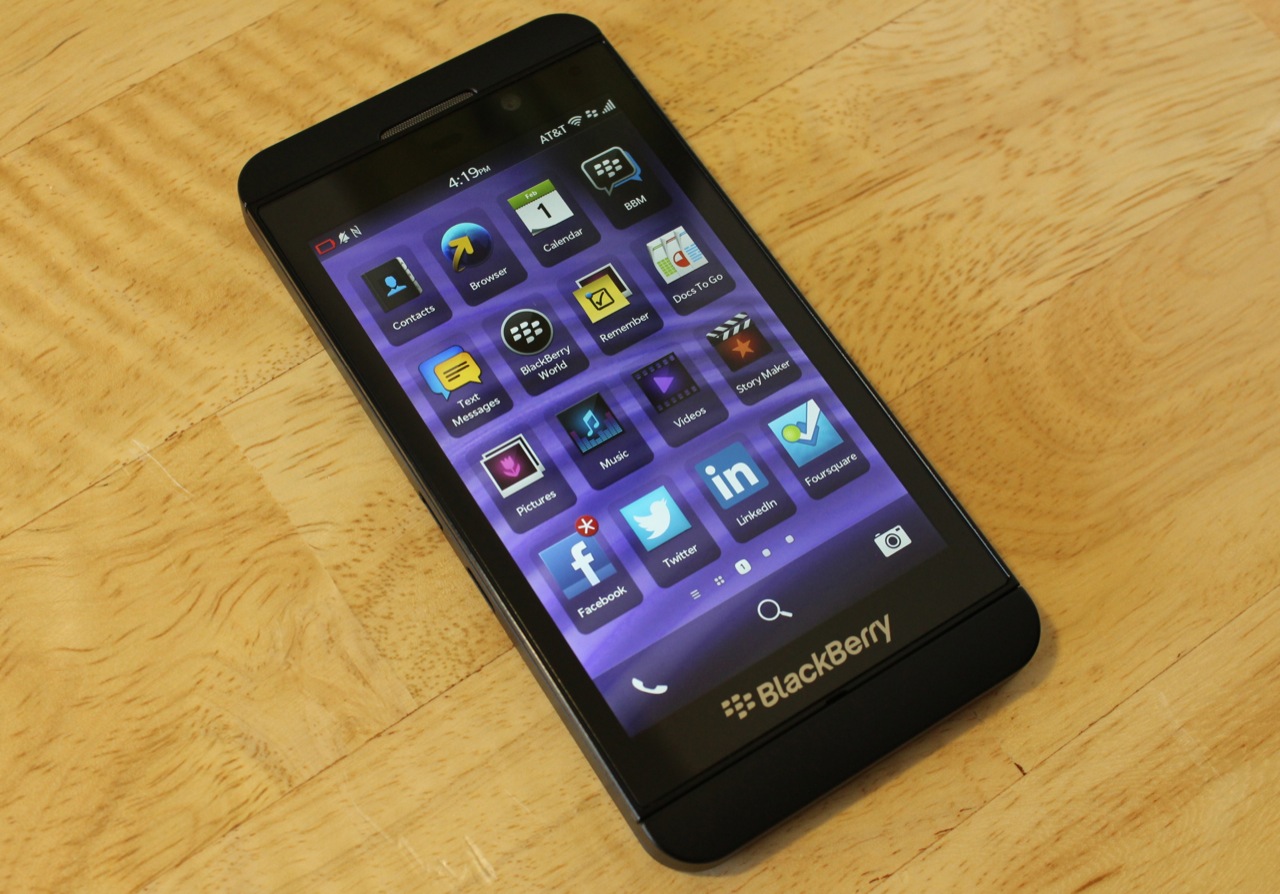
The new BlackBerry 10 OS is gathering momentum as the hardware is now reaching more markets, and next month will see the BlackBerry Q10 making an appearance. Now today there are reports that a BlackBerry phablet device is rumoured for release this year among other hardware.
We recently heard that a flagship device was due to be released at some point this year that company CEO Thorsten Heins is really excited about. A now a recently created Twitter account has leaked what is supposedly a roadmap for the platform that includes handsets we already know about, as well as a tablet and phablet devices.
The image has some possible codenames and we already know about the Z10 and Q10, but during the third quarter according to this roadmap a tablet could be coming and we have already heard conflicting reports about such a device being released this year.
According to this information towards the end of this year going into 2014 a phablet type device could be released by the company, and could be the device that the CEO is getting so excited about. This information has to be taken with a pinch of salt though as previously Heins suggested that all the hardware on the platform will feature the same sized displays.
This is to help developers when it comes to providing applications for the operating system, but CEO’s have been known in the past to not to be so forth coming with the facts to help prevent upcoming products being leaked early.

The 2010 Dell Streak used the Android (operating system) and a 5-inch, 800×480 pixel display and widescreen-optimized interface. Reviewers encountered issues with its outdated operating system, Android 1.6, which was not optimized for the larger screens. The device was commercially unsuccessful.
The 2011 Galaxy Note used a 135 mm (5.3 in) screen. While reviewers such as PC World Australia and Techradar questioned the viability of the device, the Note received positive reception for its stylus functionality, the speed of its 1.5 GHz dual-core processor, and the advantages of its high resolution display.
The Galaxy Note was a commercial success; Samsung announced in December 2011 that the Galaxy Note had sold 1 million units in two months. In February 2012, Samsung debuted a Note version with 4G LTE support, and by May 2012 the Note received an update from Android 2.3 to Android 4.0, an operating system optimzed for larger screens.By August 2012, the Note had sold 10 million units worldwide.
The 2012 Samsung Galaxy Note II employed a 1.6 GHz quad-core processor, a 5.55-inch screen and the ability to run two applications at once via a split-screen view. Sales of the Galaxy Note II reached 5 million units internationally in two months.
The 2012 LG Optimus Vu used a 5-inch display using a 4:3 aspect ratio — which was considered an unusual aspect ratio for a smartphone screen. The Huawei Ascend Mate— employed a 6.1-inch display. The 2013 Samsung Galaxy Mega is projected to have two versions, with 5.8" or 6.3" screens, neither with an integral stylus.

0 comments:
Post a Comment